Why Software Teams Are Splitting AI Coding Work Across Multiple Agents
The shift toward multi-agent development isn't about speed. It's about making AI decisions traceable.
For most of the last two years, the default AI coding tool has been a single model handling a request start to finish: read the prompt, write the code, done. That model of "AI coding assistant" is starting to look outdated in 2026, not because the underlying models got worse, but because teams ran into a specific, recurring problem with how that single pass works.
What actually goes wrong when one model does everything?
When one AI agent generates architecture, implementation, and tests in a single continuous pass, it also collapses several distinct decisions into that pass without separating them. Nobody explicitly chose the data model. Nobody explicitly decided how errors should be handled at the API boundary. Those choices exist somewhere inside the generated code, but there's no record of them being made deliberately, they're just an artifact of what the model happened to produce.
For a demo, that's fine. For anything that has to be maintained, reviewed by a second engineer, or extended six months later, it's a real cost. Someone has to reconstruct the reasoning behind decisions that were never actually recorded as decisions in the first place.
Is there evidence this is actually happening, or is it anecdotal?
There's a fairly concrete data point here. A Q1 2026 survey of nearly 2,900 professional developers found that time spent reviewing AI-generated code (11.4 hours per week) now exceeds time spent writing new code (9.8 hours per week), a clear reversal from the 2024 pattern, when writing still dominated developer time (Digital Applied, 2026).
That reversal is worth sitting with. It suggests the actual bottleneck in AI-assisted development moved from "can the model produce working code" to "can a human trust that code without redoing the reasoning behind it themselves." Generating code faster doesn't fix that. It just shifts the same amount of cognitive work later in the process, from writing to auditing.
How does splitting work across agents address that?
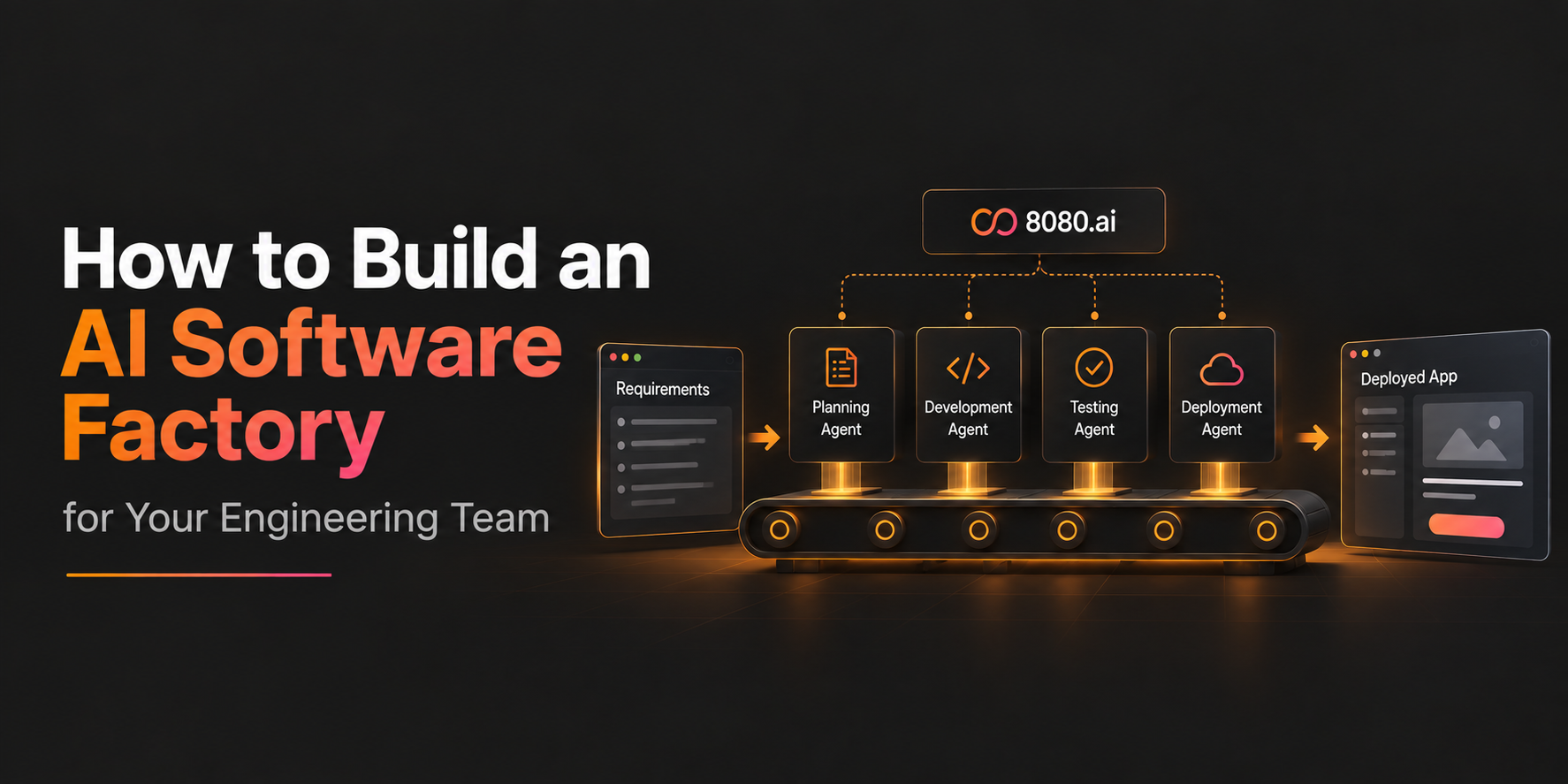
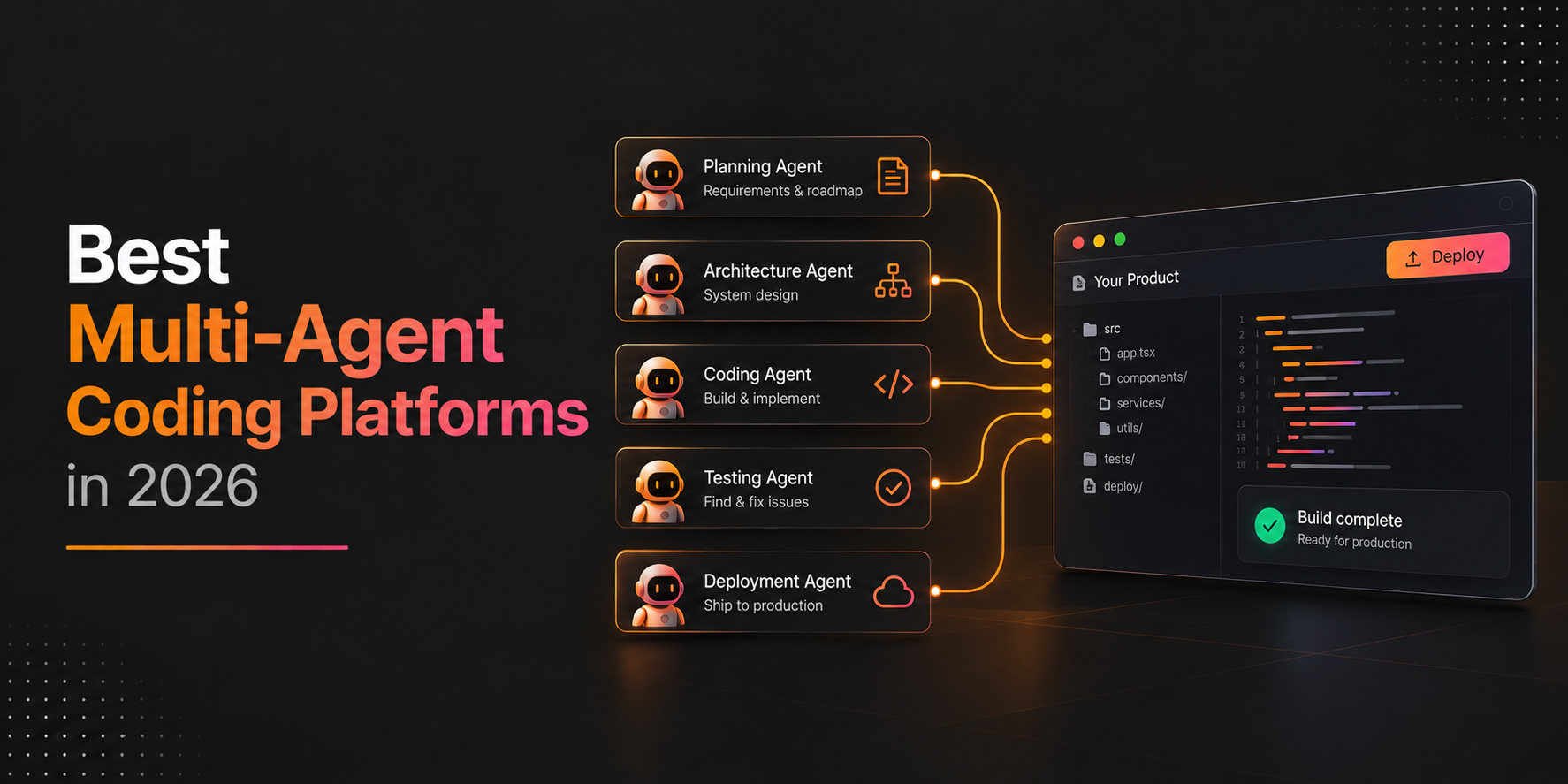
Multi-agent development responds to that specific problem, not by generating output faster, but by making each part of the output traceable to an isolated, identifiable step. Rather than one model producing everything in one pass, the work is divided into roles that mirror how an engineering team already splits responsibility: one stage is responsible for turning a specification into a system architecture and a set of explicit requirements before any code is generated; a separate stage writes implementation against that plan; other stages are scoped narrowly to testing, infrastructure, or review.
This shows up differently depending on where a platform operates. IDE-native tools coordinate multiple agents inside the editor, giving developers visibility into what each agent is doing as they work. CLI-native tools run with more autonomy from the terminal, often handling longer, more independent tasks across a codebase. Code-first frameworks give engineering teams the primitives to define these roles and handoffs themselves, at the cost of building the orchestration logic in-house. A newer category of platform takes a specification-first approach: it runs a coordinated set of specialized agents against a natural-language prompt and produces a formal system requirements document and architecture plan before any code exists, so the architecture decision is made and recorded explicitly rather than emerging implicitly from generation. 8080.ai is one example of a platform built this way, generating that requirements document and architecture plan as a defined first step in its process.
None of these approaches is categorically better. They differ in where the accountability gets built into the pipeline inside the editor, inside the terminal, inside a framework a team controls, or inside a platform that front-loads the planning conversation before generation begins.
Are developers actually adopting this, or is it still mostly framework talk?
The adoption pattern here is worth noting because it didn't wait for a single dominant platform to emerge. A separate industry survey found that 70% of engineers already run two to four AI coding tools simultaneously typically pairing an IDE-integrated assistant with a terminal agent and a distinct review or testing tool (via Exceeds.ai, citing Pragmatic Engineer survey data).
That's a meaningful detail. Most developers had already assembled an informal multi-agent workflow by hand, stacking separate tools because no single one covered architecture, generation, and verification well at once. What's happening now with dedicated multi-agent platforms, including specification-first ones like 8080.ai alongside frameworks like LangGraph and CrewAI, is closer to formalizing a division of labor that was already emerging out of necessity, rather than introducing an entirely new idea.
Does this replace the need for engineers to review code?
No, and that's worth being direct about. Splitting work across agents doesn't eliminate review, the review-time data above makes clear review is only growing as a share of developer time. What it changes is what gets reviewed and when. A requirements document and architecture plan can be reviewed before implementation exists, which is a much cheaper place to catch a bad decision than after a feature has been built, tested, and half-shipped. Tests written as an explicit stage, rather than an afterthought bundled into a single generation pass, give a reviewer something concrete to check code against rather than trusting that coverage happened implicitly.
The value isn't fewer decisions to review. It's that each decision becomes visible at the stage where catching a problem is still cheap, instead of surfacing only once it's embedded in a finished pull request.
What should a team actually look for when evaluating a platform like this?
The more useful framing than ranking platforms outright is asking where trust currently breaks down in your own process. If architecture decisions are being made implicitly with nobody able to explain them after the fact, a platform that forces an explicit requirements-and-architecture stage before code generation addresses that directly. If the friction is inside day-to-day editing, an IDE-native tool with strong agent coordination may matter more than a specification-first platform. If a team already has solid engineering discipline and wants full control over how agents hand work to each other, a framework gives that flexibility, in exchange for building the orchestration yourself rather than adopting it off the shelf.
The multi-agent category is still early enough that no single architecture has settled as the default. What's consistent across the platforms gaining traction in 2026 is the underlying goal: optimizing for auditable decisions, not just faster output. That's a different problem than the one AI coding tools originally set out to solve, and it's a large part of why the tools getting attention this year look less like autocomplete and more like small, role-specialized engineering teams working in parallel.