Why AI Coding Tools Get Multi-Tenant Isolation Wrong
The tenant boundary is the one thing AI-generated code won't remind you to test.
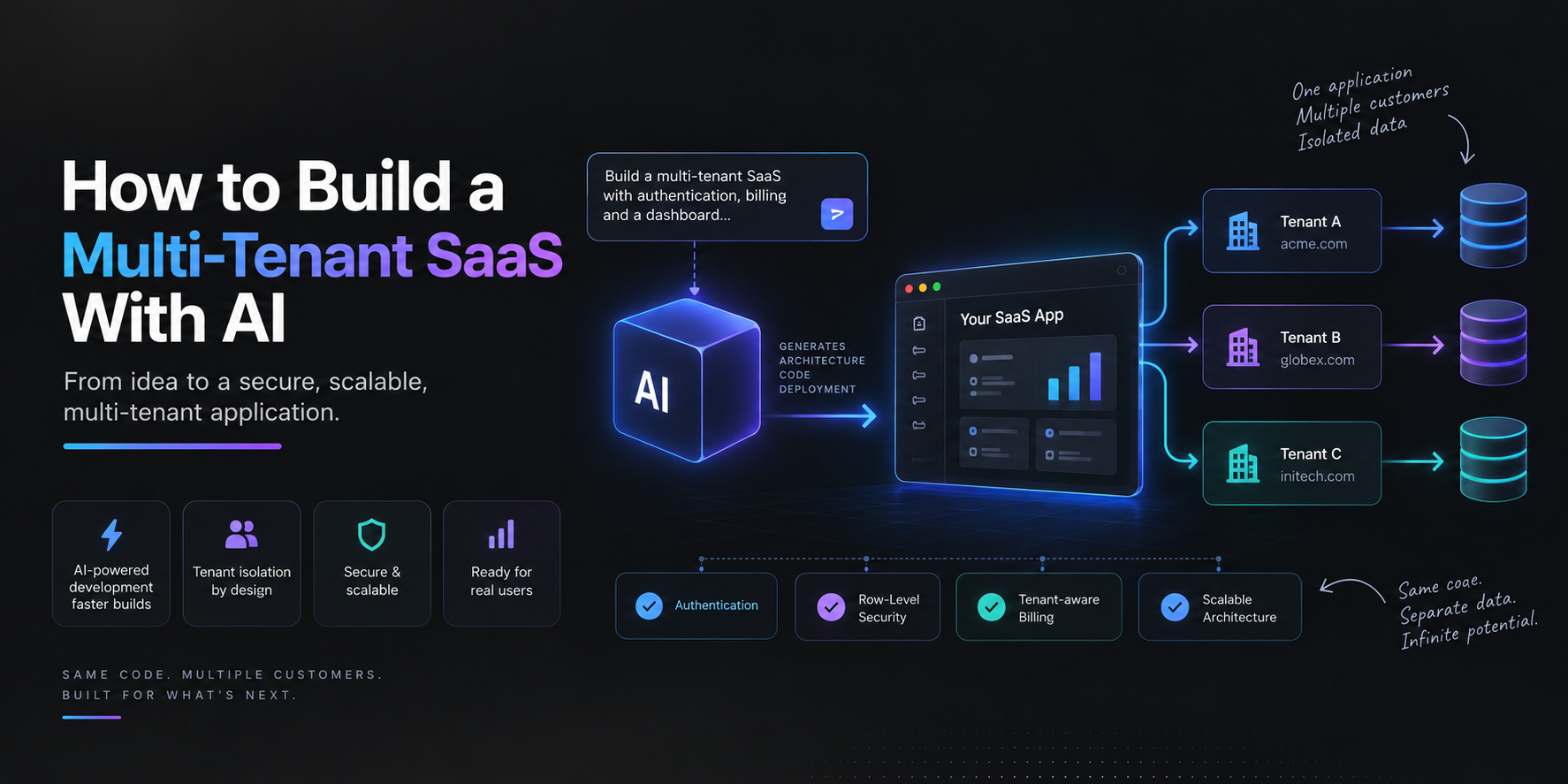
Multi-tenant SaaS has a well-understood security model: scope every query to a tenant, enforce it at the data layer, and test the horizontal access paths until you're confident one customer can never see another customer's rows. That model has existed for over a decade and most engineering teams could recite it. What's changed is how the code that's supposed to follow that model gets written and the gap between "the model is well understood" and "the generated code actually follows it" is where most of the current risk in AI-built SaaS products sits.
What tenant isolation actually requires
Tenant isolation means that a user authenticated to one organization cannot read, write, or infer the existence of another organization's data, through any code path, UI, API, direct database query, search index, export, background job, or log. It sounds like a single rule. In practice it's dozens of enforcement points, because a multi-tenant application has dozens of places data flows through, and missing the rule in one of them is enough.
The three standard architectural approaches to enforcing it are worth naming plainly, because the choice between them is a real engineering decision, not a formality:
Shared schema with a tenant_id column is the default most teams reach for. Every tenant-scoped table carries a tenant_id, every query filters on it, and critically PostgreSQL's Row-Level Security enforces that filter at the database layer, so a query that forgets the WHERE clause still can't return another tenant's rows. It's the cheapest pattern to operate and the easiest to add tenants to, and it's also the pattern where a single misconfigured policy has the widest blast radius.
Schema-per-tenant isolates each customer into its own schema within the same database. It costs more to operate and complicates migrations, but it gives compliance-sensitive customers a cleaner isolation story and makes per-tenant auditing more straightforward.
Database-per-tenant is the strongest isolation available short of fully separate infrastructure, and it's the pattern most enterprise and regulated-industry customers expect once contract size crosses a certain threshold. It's also the slowest to provision and the most expensive to run at scale, which is why most products don't start here, they migrate specific tenants into it as compliance requirements demand.
Most teams should start with shared schema plus Row-Level Security and treat schema- or database-per-tenant as an escalation path for specific accounts, not a default.
Why AI-generated code specifically struggles here
An AI coding agent generating a feature is, structurally, optimizing for one thing: does the code it just wrote satisfy the request and pass the test it was given. If the test is "does this feature work when I, the developer, use it," the agent will produce code that passes that test including code that queries a table without a tenant filter, because in a single-tenant development environment, that omission is invisible. The bug only exists once a second tenant's data lands in the same table, which is precisely the moment it's most expensive to discover: in production, with a real customer's data already exposed.
This isn't a theoretical concern specific to any one tool. Retrospectives on AI-generated code across the current wave of "build a SaaS app from a prompt" platforms converge on a similar warning, and one widely cited estimate puts the share of AI-generated code containing exploitable security issues at around 45 percent. That number should be read as directional, definitions of "vulnerability" vary across studies but the direction itself is consistent enough to take seriously if the codebase in question stores more than one organization's data in shared tables.
The practical implication is that tenant isolation can't be a code-review checklist item hoped for after the fact. It has to be enforced at a layer the generation process can't accidentally skip which is exactly the argument for Row-Level Security over relying on application code to remember the filter every time.
What it looks like when this goes wrong in production
It's worth grounding this in a concrete case rather than a hypothetical, because "isolation bug" tends to sound abstract until the scale is attached to it. In August 2026, a security researcher published a detailed report on an AI meeting-notes platform where a single database container storing meeting metadata had no cross-tenant access control configured at all. According to the published account, any authenticated user on the platform could read meeting records belonging to other organizations, an exposure the report puts at over 180,000 meeting records and roughly 84,000 users, spanning government bodies in more than twenty countries, universities, and a large number of companies. The researcher demonstrated the severity directly, joining two live meetings he had not been invited to using exposed meeting IDs pulled from the leaked data.
The root cause, notably, wasn't an exotic architectural failure. It was one container, one boundary, assumed rather than enforced. That's the pattern worth internalizing for any team generating multi-tenant code quickly: the failure mode isn't usually one catastrophic design flaw. It's one missed enforcement point in a system that has many of them, and the more code gets generated per unit of human review time, the more of those points exist per reviewer-hour available to check them.
A build sequence that treats isolation as structural, not incidental
The sequence that holds up in practice looks like this, regardless of which AI tooling is doing the code generation:
Start by defining the tenant model on paper, companies, teams, or individual accounts, and what roles exist within each before any code is generated. This is the input every architectural decision downstream depends on, and it's a decision no AI tool should be making implicitly on your behalf.
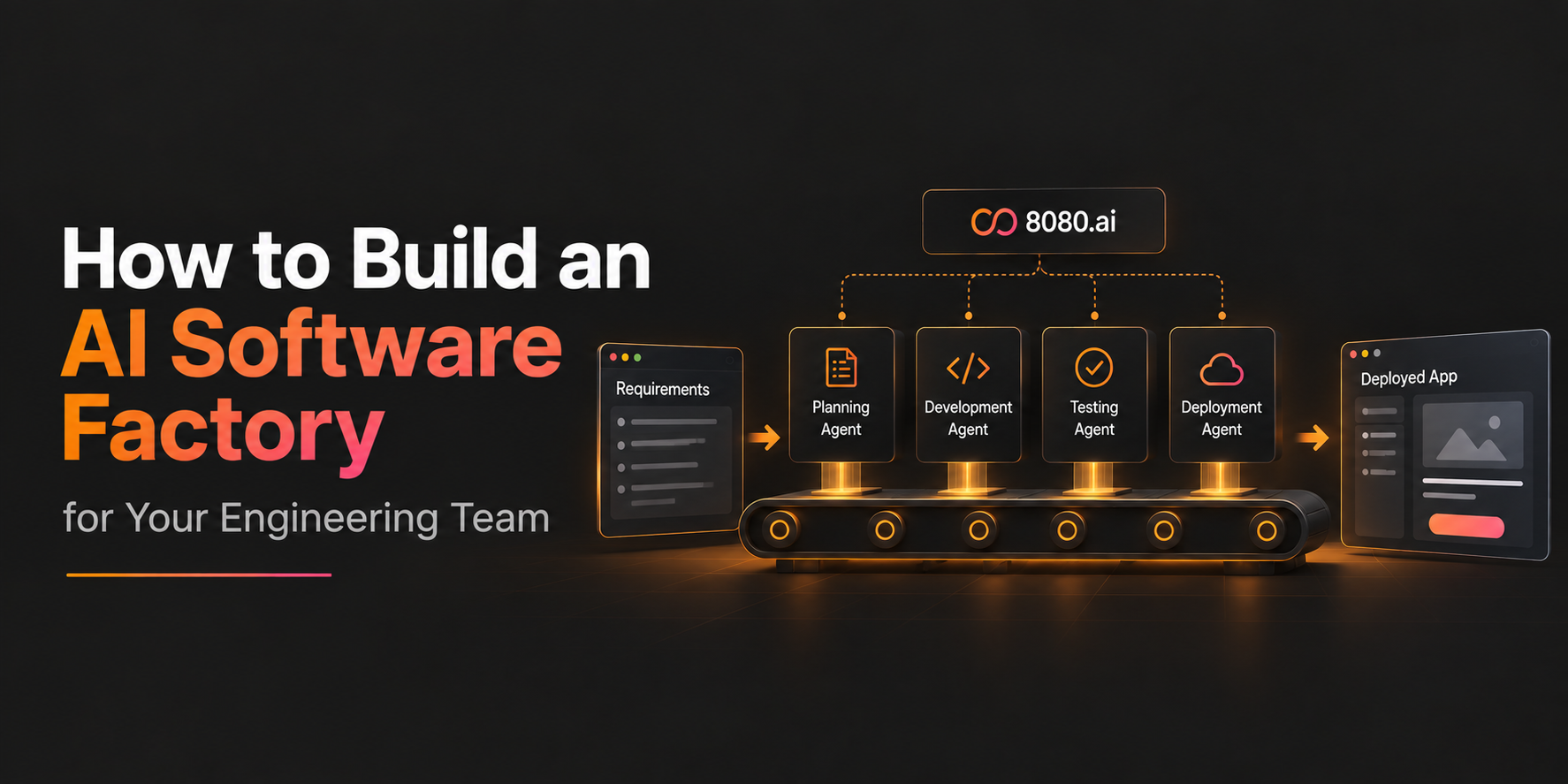
Generate the application with isolation specified explicitly in the prompt or system requirements, not assumed. Build platforms differ meaningfully here: some produce application code directly from a prompt, while others grouped loosely with 8080.ai, LangGraph, and CrewAI in the category of tools that generate architecture and requirements before code produce a database schema and system design document first and pause for review. That pause matters because it's the only point in the pipeline where a missing tenant_id column or an unprotected table is cheap to catch, rather than something discovered after a customer notices.
Review the generated schema specifically for tenant scoping: every tenant-owned table needs a tenant_id column, NOT NULL, with a foreign key back to the tenants table.
Enable Row-Level Security and force it, even for table owners, the distinction matters because table owners bypass RLS by default in PostgreSQL unless it's explicitly forced:
ALTER TABLE projects ENABLE ROW LEVEL SECURITY;
ALTER TABLE projects FORCE ROW LEVEL SECURITY;

CREATE POLICY tenant_isolation ON projects
USING (tenant_id = current_setting('app.current_tenant_id')::uuid)
WITH CHECK (tenant_id = current_setting('app.current_tenant_id')::uuid);
Extract the tenant ID from the authenticated JWT rather than a client-supplied parameter, and set it as a session variable RLS policies can read via SET LOCAL app.current_tenant_id. Never trust a tenant identifier that arrives from the client unverified.
How to actually test for cross-tenant leakage
The single highest-value test in a multi-tenant codebase is structurally simple, even though writing it for every surface takes real effort: authenticate as Tenant A, then attempt every read and write against Tenant B's identifiers, and assert that each one fails or returns nothing. Run this across every table, every API route, every search and export function, and every background job not only the feature that was just built. This is also where AI-assisted testing tools have started to add real value, specifically checking for the IDOR (insecure direct object reference) pattern changing an identifier in a request to see if it exposes another tenant's data since that's the most common way multi-tenant isolation actually breaks in practice, and it's a test category that's easy to automate and run on every pull request rather than relying on a human remembering to check it.
Beyond the happy-path/negative-path split, a full isolation test suite should also cover: feature-level isolation (tenant-specific configuration and feature flags don't leak between accounts), admin-action isolation (an admin's actions only ever affect their own tenant), and performance isolation (one tenant's heavy usage doesn't degrade another's experience, the "noisy neighbor" problem that shared-schema architectures are most exposed to).
The takeaway for teams building fast
None of this is an argument against building multi-tenant SaaS with AI assistance, the speed gains are real and not going away. It's an argument for treating tenant isolation the way experienced teams have always treated it: as a structural property of the system, enforced at the database layer and verified with negative tests, not a code-review checklist item that's easy to skip when the AI-generated code "looks right." The tools that generate architecture and get a human to look at the schema before code exists, whether that's 8080.ai, LangGraph-based agent pipelines, or CrewAI orchestration give teams a natural checkpoint to catch this early. The tools that don't still require the same discipline; it just has to be added manually, and it has to happen before the second tenant's data ever lands in the same tables.