Why Low-Code Adoption Keeps Growing and What AI App Builders Can Learn From It
Low-code earned trust by making software readable. Here is how AI-generated apps can earn the same trust, and what to check first.
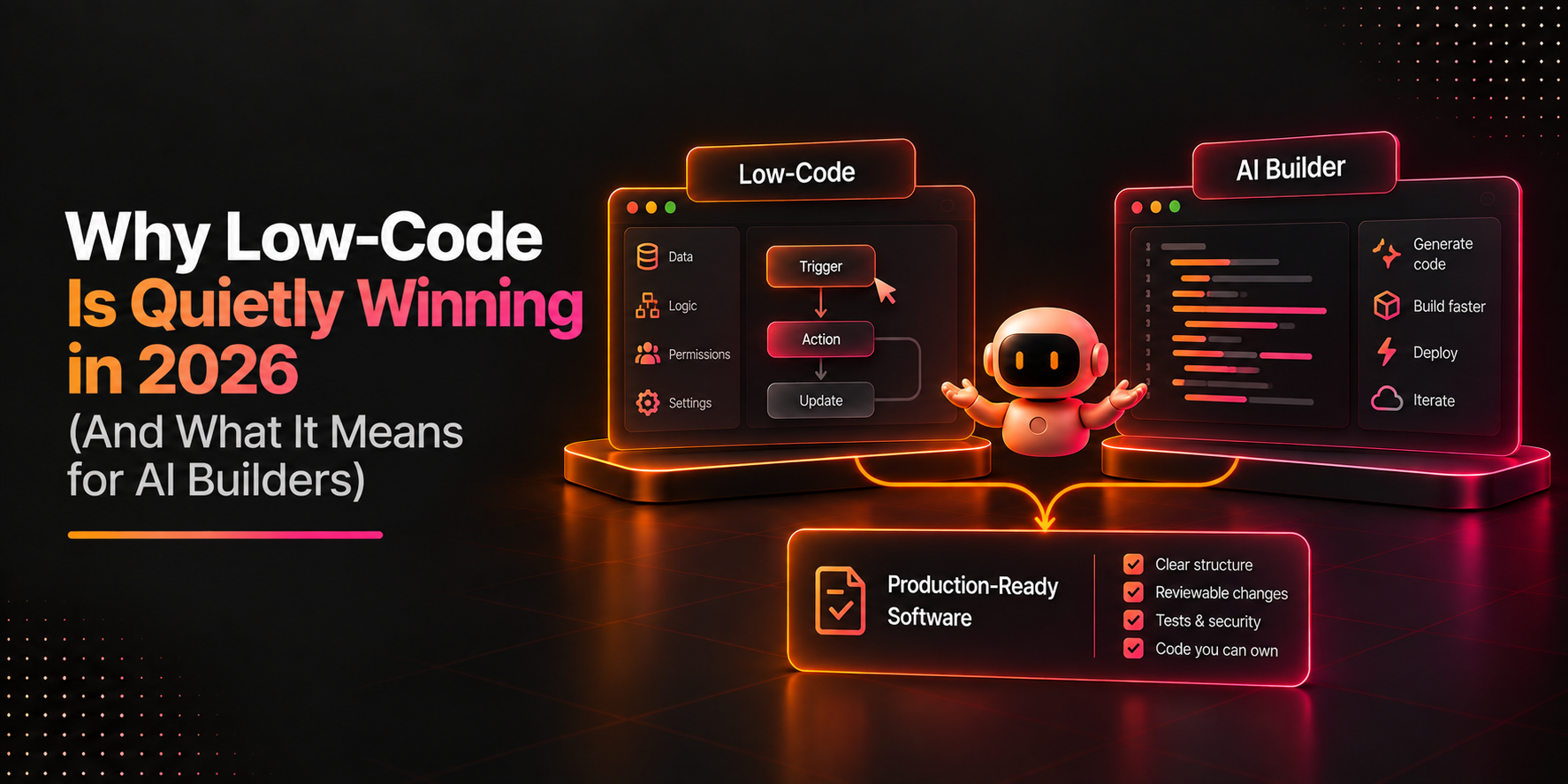
Low-code has had an odd decade. It was dismissed as a toy for non-developers, then quietly became part of how large organizations build internal software. Meanwhile, AI app builders arrived promising to turn a plain-language description into a working application. On paper, that should have made visual platforms obsolete. It hasn't.
This post looks at why low-code keeps growing, what problem it was really solving, and what that tells developers who are building with AI-generated code today.
What does the adoption data say about low-code?
Gartner forecast that by 2025, 70% of new applications developed by enterprises would use low-code or no-code technologies, up from less than 25% in 2020. It's a forecast rather than a measurement, and the date has already passed, so it works better as a signal of direction than a precise number.
The more interesting claim looks further ahead. Gartner's 2024 Magic Quadrant for Enterprise Low-Code Application Platforms, as quoted in a Mendix blog post, expects enterprise low-code platforms to be used for mission-critical application development in 80% of businesses globally by 2029, up from 15% in 2024.
Prototyping tools don't usually end up in mission-critical conversations. Something else is going on.
What problem was low-code actually solving?
Most developers know the feeling of inheriting a system and spending the first week answering basic questions. Where is the data model defined? Who can change what? How does this get deployed? What breaks if this field is renamed?
Low-code platforms answer many of those questions by design. The data model is a visible artifact. The workflow is a diagram. Access rules sit in a settings panel. Hosting, scaling, and upgrades belong to the platform, so they don't depend on whoever happened to set things up.
In developer terms, low-code reduced the cost of reading a system. That matters because for most software, reading costs more than writing. Code is written once and read dozens of times, by reviewers, by maintainers, by auditors, and by the next person on call.
So the draw was never only speed. It was the ability to hand a system to someone else and have them understand it quickly.
Why does generated code create a reading problem?
AI code generation flips the usual ratio. Writing becomes nearly free, but reading doesn't get any cheaper. A tool can produce a thousand lines in seconds, and a human still has to decide whether those lines are correct, secure, and consistent with everything else.
The reasoning is often the missing piece. A generated app may work, but the why behind it isn't always preserved: which requirement led to this schema, why this permission model was chosen, what changed between the first version and the second. Without that, every later change carries a little more uncertainty than the last.
None of this is a flaw in AI builders so much as a gap in the process around them. Fast generation needs a structure that makes the output reviewable.
What does "readable" look like for an AI-built app?
If low-code's real contribution was legibility, the useful question for AI-generated software is: what are the equivalents? A practical list looks something like this.
A written source of truth. Requirements in plain language, kept alongside the code, so anyone can compare what was asked with what was built.
Visible architecture. Diagrams or schemas that exist before implementation, so design decisions can be questioned while they're still cheap to change.
Changes as diffs. Updates that arrive as small, reviewable differences, not full rewrites that need to be re-read from scratch.
Automated checks. Tests, dependency scans, and secret detection running on every change instead of on request.
Real ownership. Standard code, in a repository the team controls, deployable on infrastructure the team understands.
None of these are exotic. They're what a careful engineering team already does. The shift is expecting the same from tools that generate code.
How do AI builders handle this today?
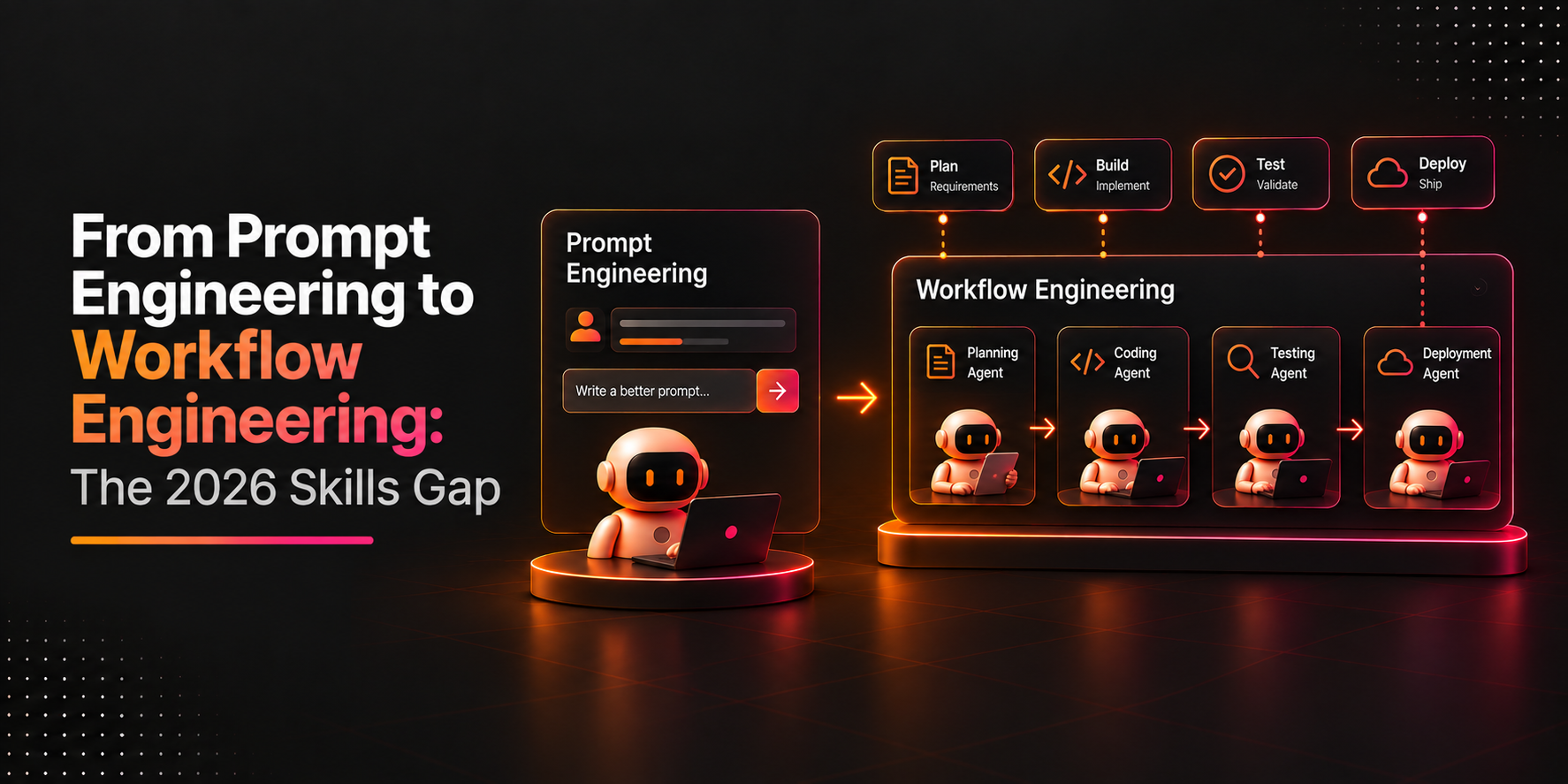
Approaches vary. Some tools optimize for the shortest path from prompt to running app. Frameworks like LangGraph and CrewAI give developers building blocks for assembling their own multi-agent workflows. Others add process between the prompt and the code.
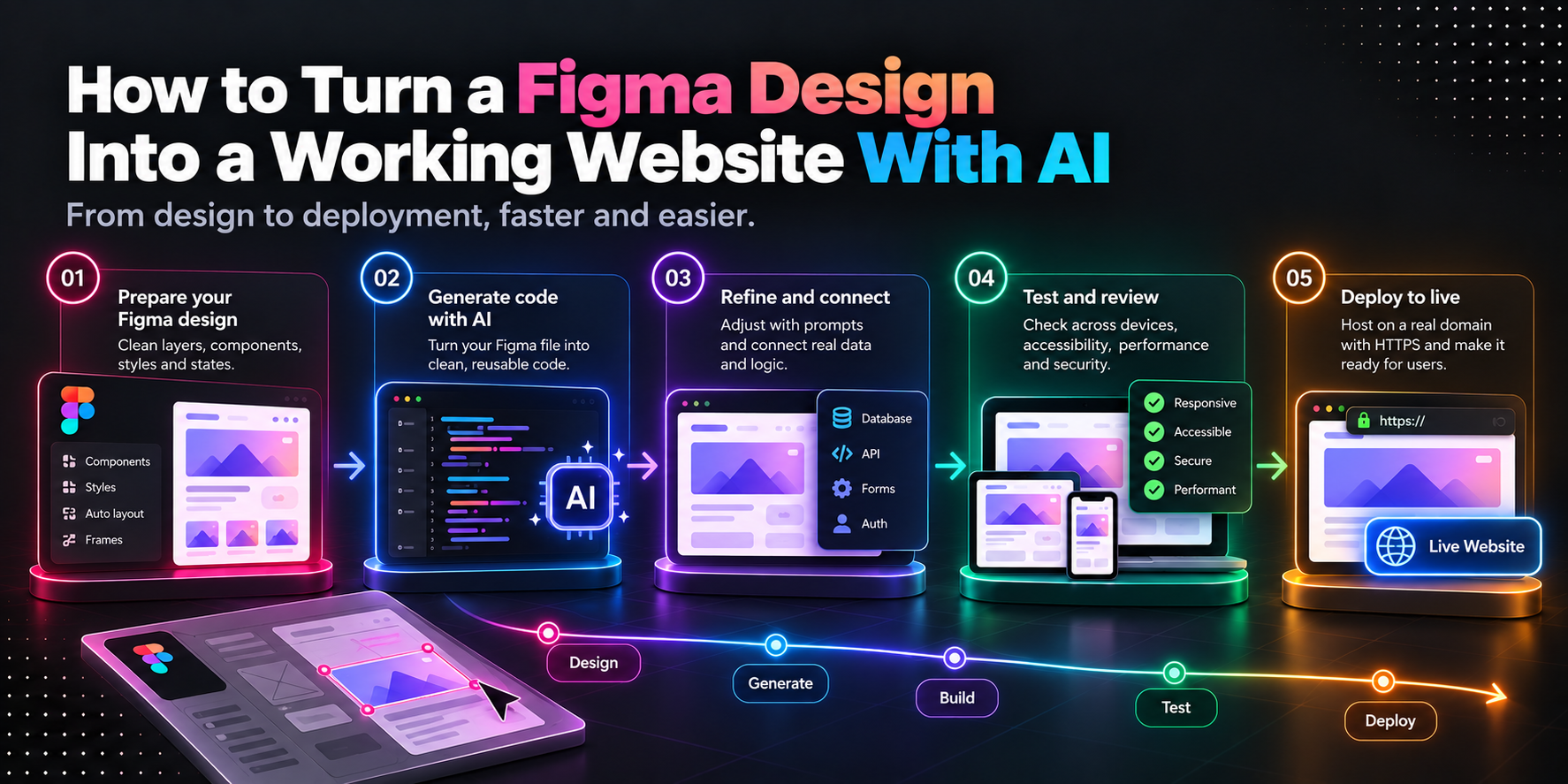
8080.ai is one example of the last group. According to its public site, a project moves through nine steps rather than one: a requirements document is written first and treated as the source of truth, later changes arrive as diffs to accept or reject, and user flows, designs, architecture diagrams, and a task plan are approved before building begins. Each task then runs in an isolated workspace, merges into the repository by pull request, and is scanned for leaked secrets, vulnerable dependencies, and unprotected API routes before reaching staging.
The specific tool matters less than the pattern. More review points sit between the prompt and the code, which moves the human's job from typing toward deciding.
What should you check before trusting an AI-generated app?
Whatever tool produced it, a short review pass catches most of the issues that surface later:
Read the schema first. Tables, relationships, and constraints reveal more about an app's quality than the UI does.
Trace one permission path end to end. Pick a protected action and follow it from the request to the data. Gaps often hide here.
Look for the requirement behind each feature. If you can't find what was asked for, the feature will be hard to change later.
Run the dependency and secret scans yourself. Don't assume they ran.
Deploy it somewhere other than the tool's preview. Moving an app to a real environment exposes assumptions that preview mode hides.
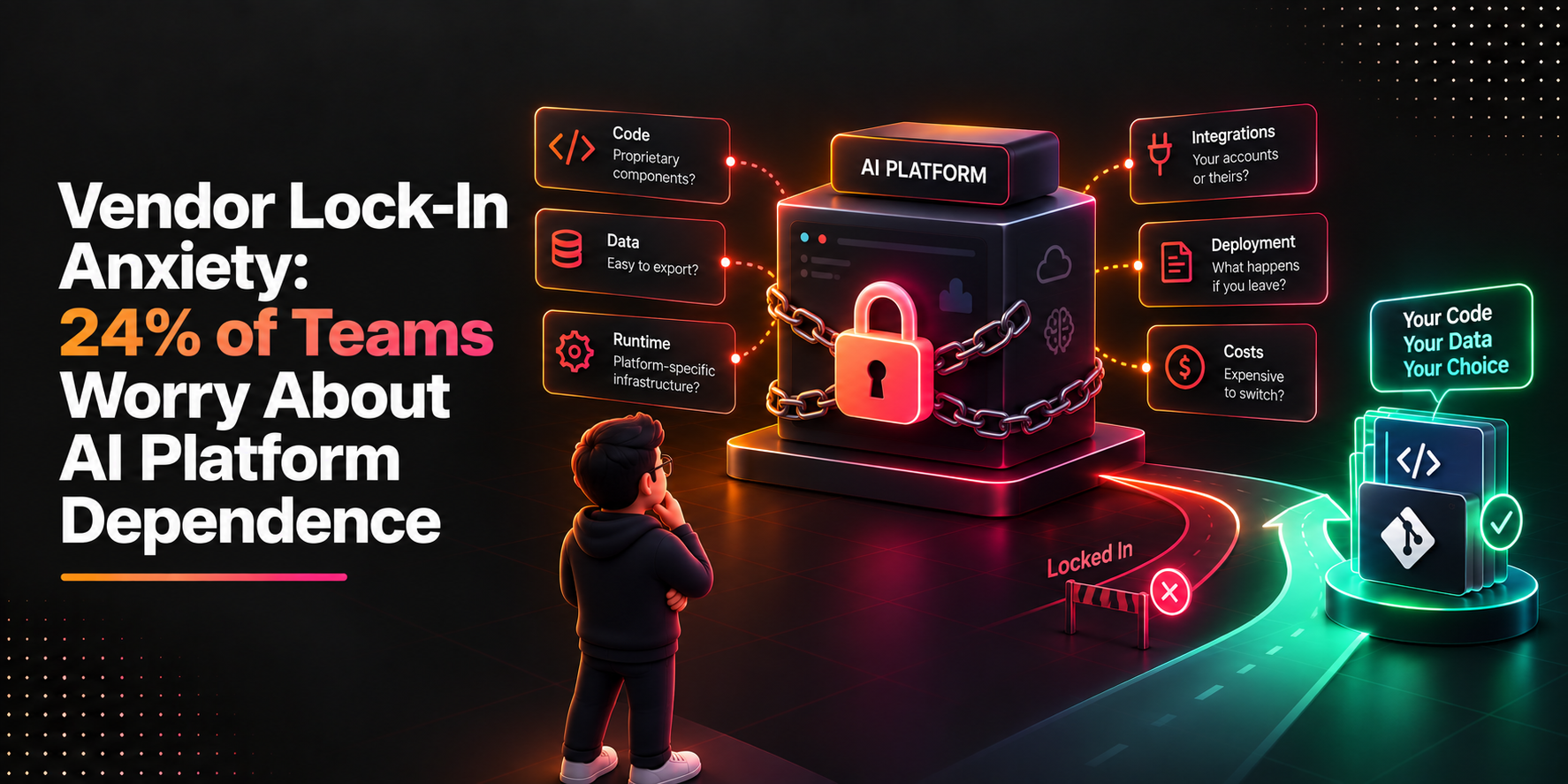
Check that you can leave. Confirm you could take the code and run it without the original tool.
If an app passes these, it's probably legible enough to maintain. If it doesn't, the problem is better caught now than after launch.
Where do low-code and AI-built software meet?
They're converging more than competing. The same Gartner report, as quoted in that Mendix post, lists AI-augmented development alongside mainstream enterprise adoption and composable business as drivers of low-code growth. Visual platforms are adding AI. AI builders are adding structure. Platforms like 8080.ai are a visible case of the second half: they don't remove the review step, they build it into the pipeline, which is the same instinct visual platforms had from the start.
For developers, the practical takeaway is that the question is shifting. It used to be "how fast can this be built?" Increasingly it's "how quickly can someone else understand it?" The tools, and the teams using them, that answer the second question well are the ones likely to still be around when the novelty fades.